Updated July 2026.
Rattan is a tropical vine that is bent for furniture, caning is a fine rattan weave, and seagrass is a marsh fiber woven into baskets and rugs. To incorporate them, use natural accents; to care for them, dust frequently, clean with a barely damp cloth, and avoid standing water and direct sunlight.
Rattan, caning, seagrass: who's who?
These fibers are often confused, yet each has its origin and use. Distinguishing them helps in choosing and maintaining them better.
| Fiber | Origin | Common use |
|---|---|---|
| Rattan | Tropical palm vine | Bent furniture structures, seating |
| Caning | Woven rattan bark | Chair backs, cabinet doors |
| Seagrass | Marsh and rice paddy plant | Baskets, ottomans, rugs |
| Seaweed, water hyacinth | Woven aquatic plants | Planters, baskets, hampers |
The common thread: they are all hand-woven natural fibers, warm and light, bringing a lively texture impossible to imitate with plastic.

Why embrace natural fibers
Rattan, caning, and seagrass are making a strong comeback for good reasons:
- They instantly warm up a room that is too sleek or minimalist, adding a handmade touch.
- They are lightweight and easy to move, ideal for an extra ottoman or a basket that can be moved around as desired.
- They match everything: light wood, linen, off-white, plant green. It's a neutral and natural base.
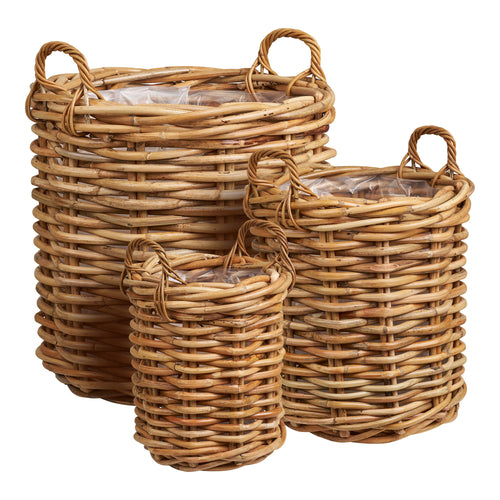
A simple seagrass storage basket or a woven planter is enough to add that extra soul that a too-new decor sometimes lacks.
How to integrate them without overdoing it
Natural fiber is generous: too many elements at once, and the room turns into a holiday chalet. A few rules to keep it just right:
- Proceed in touches: two or three well-distributed pieces are better than an accumulation.
- Vary scales: a large basket on the floor, a medium planter, a small woven tray, to create rhythm.
- Maintain a theme: always associate the fiber with a calm material, like linen or light wood, to balance its texture.
- Think function: a basket hides a blanket, a planter dresses up a plant. Fiber is both decorative and useful.

How to care for rattan and caning
Rattan and caning are robust, but they fear two excesses: water and sun. Here's how to keep them beautiful:
- Dust regularly with a vacuum cleaner with a brush attachment. For caning, a soft brush or toothbrush dislodges dust from the weave.
- Clean with a barely damp cloth: a cloth slightly moistened with mild soapy water, then immediate drying. Never standing water.
- Re-tighten loose caning: lightly moisten the back with lukewarm water, then let it dry flat. As it dries, the fibers tighten and regain their tension.
- Keep away from direct sunlight and heat sources, which weaken and yellow the fiber.
How to care for seagrass and woven fibers
Seagrass, seaweed, and water hyacinth behave similarly. They tolerate daily use well, provided their plant nature is respected:
- Gentle vacuuming for a rug or ottoman, and regular shaking for a basket.
- Treat stains quickly: dab with a barely damp cloth, without soaking, then air dry.
- Aeration: in a humid room, take the item outside occasionally to prevent musty odors.
- No soaking: never wash a woven fiber with a lot of water; it would deform as it dries.

Fenalor's tip: for a bathroom or humid room, prefer the most moisture-resistant fibers, such as seagrass, and ensure good ventilation. Reserve fine and delicate caning for dry rooms, where it will long retain its beautiful tension. Find our baskets and hampers in the decoration section.
How to recognize a weave that will last
When purchasing, a few simple checks separate well-crafted fiber from a weave that will loosen within a year. First, run your hand over the entire surface: it should be even, without broken strands, no protruding ends or splinters. A tight weave, where no gaps are visible between the strands, lasts significantly longer than a loose mesh. Then look at the structure under the seat or the bottom of the basket: the strands should be knotted or woven around a frame, not just glued at the end. On rattan furniture, bent joints should be firm to the touch, with no play or cracking. Finally, the color: a natural fiber always presents slight variations in tone, a sign that it has not been excessively dyed. A perfectly uniform appearance often betrays a thick varnish that will flake. These same checks apply to a woven seat: see our guide on how to choose an ottoman.
Restoring yellowed or stained natural fiber
Natural fiber can often be restored, provided you do so gently. For rattan yellowed by light, prepare a very diluted mixture of lukewarm water and lemon juice, apply it with a cloth, rinse with barely damp clear water, and let dry for 24 to 48 hours in the shade, never near a radiator. For a localized stain on seagrass, dab with cold soapy water starting from the edge towards the center, to avoid leaving a ring. A raised strand can be re-glued with white wood glue, held with adhesive tape until dry. If a caning panel is pierced or too loose to be re-tensioned, it can be replaced: caning is sold in rolls by the meter, to be soaked for an hour in lukewarm water before installation to make it pliable. An colorless matte varnish then protects the surface, without changing the shade.
Frequently asked questions
What's the difference between rattan and wicker?
Rattan comes from a dense, solid tropical palm vine, which is bent to create furniture. Wicker refers to flexible willow branches, primarily used in basketry for baskets. Both are woven, but rattan is more rigid and structural, wicker is finer and more fibrous.
Do rattan and caning withstand humidity?
Moderately. A slightly humid atmosphere is not a problem and even helps the fiber stay flexible. However, standing water and strong variations weaken them. Avoid installing them facing a direct water source or in direct sunlight behind a window.
How to revive caning that has loosened?
Lightly moisten the back of the caning with lukewarm water, without soaking it, then let it dry flat, away from a heat source. As it dries, the fibers tighten and the surface regains its original tension. Repeat if necessary.
Is seagrass suitable for a home with pets?
Yes, seagrass is one of the most resistant fibers: its smooth strands withstand heavy traffic well. A basket or ottoman will keep up with a busy daily life. Just avoid letting an animal scratch it, as the fibers could eventually fray.
Want to bring this natural warmth into your home? Discover our woven storage and all of our decorations. For a soft and soothing interior, also read how to furnish a soothing bedroom.
In the same family of natural materials to care for, choosing and caring for a hide.