Updated July 2026.
To choose a nightstand, first adjust the height: aim for a top that's roughly level with the mattress, generally 55 to 65 cm (21 to 25 inches) from the floor. Then adjust the width to the free space around the bed, the storage to your needs with a drawer or a cubby, and the finish to the bedroom's style.
Height: Level with the Mattress
This is the primary criterion. A comfortable nightstand has its top roughly level with the top of the mattress, allowing you to grab a glass of water or put down your book without bending over. In practice, this most often corresponds to a height of 55 to 65 cm (21 to 25 inches) from the floor, but it all depends on your bed. The right approach: measure the height of the top of your mattress, including bedding, then choose a nightstand whose top is within a few centimeters of that level. A top that's too low forces you to bend down, while a top that's too high breaks the line of the bed.

Width and Depth: Consider Traffic Flow
A nightstand must fit without obstructing passage. Measure the space between the bed and the wall or neighboring furniture, and maintain at least 60 cm (23 inches) of clearance to move around without bumping into things. In terms of dimensions, a nightstand is generally 30 to 50 cm (11 to 19 inches) wide and 30 to 40 cm (11 to 15 inches) deep. In a narrow bedroom, opt for a compact or wall-mounted model, which frees up floor space and visually lengthens the room. In a large bedroom, a more generous nightstand balances the proportions of the bed.

Storage: Drawer, Cubby, or Simple Top
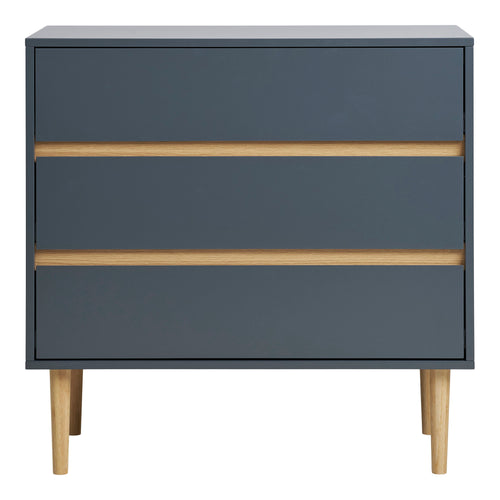
The right storage depends on what you keep by your bedside. A drawer conceals personal items like glasses, chargers, or medications, keeping the top clear. An open cubby can hold current books and a decorative object. The top itself is reserved for evening essentials: a lamp, phone, and a glass of water. The most practical models combine all three. To maintain a restful bedroom, prioritize closed storage, as recommended in our guide on how to create a soothing bedroom.

Style, Material, and Pair
The nightstand is less noticeable than the bed, but it sets the tone for the bedroom. A pair of identical nightstands on each side of the bed creates a calming symmetry, while two mismatched models create a more relaxed feel, provided they share a common material or color. Match the finish to the rest of the room: light wood for softness, black metal for a contemporary touch, fluting or golden handles for a more dressed-up look. Also, consider the bedside lamp that will complement it.
Key Points at a Glance
| Criterion | Good Guideline |
|---|---|
| Height | Top level with mattress, 55 to 65 cm (21 to 25 inches) from the floor |
| Width | 30 to 50 cm (11 to 19 inches), with 60 cm (23 inches) free passage |
| Depth | 30 to 40 cm (11 to 15 inches) to avoid obstruction |
| Storage | Drawer for hiding, cubby for books |
Fenalor Tip: Before buying, measure the height of the top of your mattress, including bedding. This, not the bed size, determines the correct nightstand height. This detail makes all the difference in everyday comfort.
Outlets, Chargers, and Cables: Think of the Nightstand as a Station
Today's nightstand powers a lamp, a phone, sometimes an e-reader and an alarm clock. It's best to anticipate this. First, locate the height of your wall outlets: most often placed 20 or 30 cm (7 to 11 inches) from the floor, they can be hidden by the furniture. A nightstand open at the back or with a cable pass-through then prevents you from having to pull it away from the wall. A small flat power strip fixed under the top, or a charging block stored in the drawer, instantly eliminates dangling wires. Also, plan for control: a cord switch accessible from the bed, or a smart bulb, avoids having to get up. Finally, leave a clear area of at least 15 x 15 cm (6 x 6 inches) on the top to place a phone flat. The rest depends on the lamp, which should be chosen to be low enough not to be dazzling: see our table and bedside lamps.
Wall-Mounted Nightstands and Other Space-Saving Formats
When the bedroom is narrow, format matters more than style. A wall-mounted nightstand is fixed to the wall and completely frees up floor space: position it so its top is level with the mattress, generally 55 to 65 cm (21 to 25 inches) from the floor, and ensure a sturdy mounting, as it will be cantilevered. Plan for at least two anchor points and an appropriate wall plug for the type of wall. Another solution is a round end table 35 to 40 cm (13 to 15 inches) in diameter, which slips into a corner and eliminates sharp edges near the bed. A low stool, two stacked crates, or a simple wall shelf placed at the right height can serve the same purpose with much less clutter. In all cases, maintain at least 60 cm (23 inches) of clear passage between the bed and the wall. Our tables include these smaller formats.
Frequently Asked Questions
What height for a nightstand?
Aim for a top that's roughly level with the top of the mattress, most often between 55 and 65 cm (21 and 25 inches) from the floor. First measure the height of your mattress, including bedding: this is what dictates the choice. A tolerance of a few centimeters above or below remains comfortable.
What width to choose for a nightstand?
Choose a nightstand 30 to 50 cm (11 to 19 inches) wide depending on the available space, maintaining a passage of at least 60 cm (23 inches) between the bed and the wall to move around without bumping into things. In a small bedroom, a narrow or wall-mounted model frees up floor space and lightens the room.
Should I get a nightstand with a drawer?
A drawer allows you to hide glasses, chargers, or medications and keep the top clear. An open cubby is better for books and a decorative object. The best option combines both: a top for the lamp, a drawer for personal items, and a cubby for reading material.
What to do if there's no space for a nightstand?
In a limited space, replace the nightstand with a small end table, a stool, or a wall shelf placed at the correct height. A wall-mounted nightstand frees up floor space and makes cleaning easier. The essential thing is to have a surface for a lamp and evening items.
To find the nightstand that matches your bed, browse our selection of furniture and our bedroom collection. Then match it with the right bedside lamp and follow our ideas for creating a soothing bedroom.