Updated July 2026.
When choosing a sideboard, first consider its dimensions: plan for a depth of 40 to 50 cm, a height of 75 to 90 cm, and a length ideally shorter than your dining table. Allow 90 to 100 cm of clear space around it for movement and to open doors. The type of storage, style, and material can then be chosen.
Sideboard, Buffet, Enfilade, China Cabinet: What's the Difference?
These names refer to similar, but not identical, storage furniture. Understanding the distinctions helps in choosing the right format:
- The sideboard is the generic term: a low piece of furniture with doors and drawers, used to store dinnerware, table linen, and small items.
- The enfilade is a low, elongated sideboard, often on legs: it emphasizes length and provides a large surface for decoration.
- The buffet is a low, closed sideboard, usually compact and sturdy.
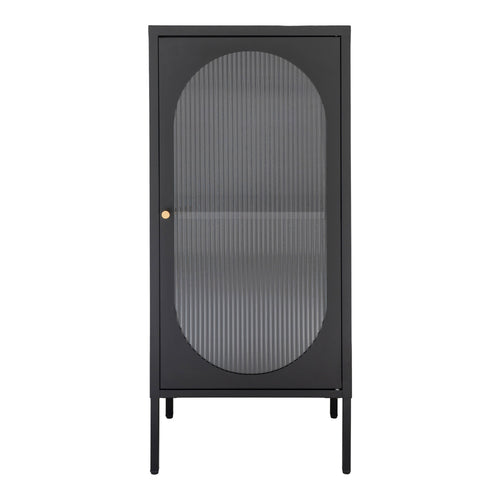
- The china cabinet and display cabinet are their taller versions, with a glass section to display dinnerware and objects.

The Right Sideboard Dimensions
Comfortable use depends on a few simple measurements. Check them on the product sheet, and most importantly, measure your room before ordering:
| Measurement | Recommended Value | Reason |
|---|---|---|
| Depth | 40 to 50 cm | To store without impeding movement |
| Height | 75 to 90 cm | A useful surface at hand height |
| Length | Shorter than the table | A piece of furniture well-proportioned to the room |
| Space around | 90 to 100 cm | To move around, open doors, pull back a chair |
A height of around 80 to 90 cm is ideal: the top becomes a living surface, perfect for placing a lamp, a vase, or a tray when entertaining.
Doors, Drawers, or Display Cabinet: What Storage Type?
The right arrangement depends on what you want to store and display:
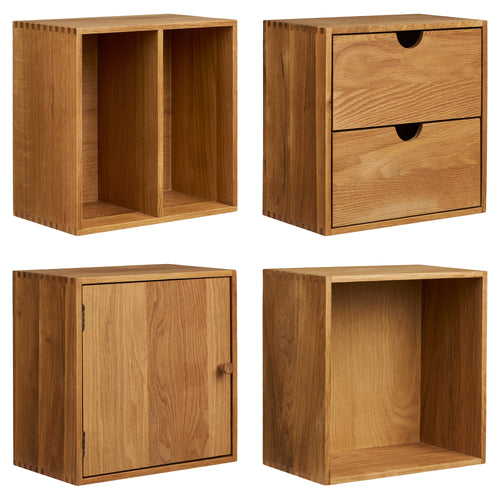
- Doors conceal large volumes: everyday dinnerware, serving dishes, tablecloths. Ideal for hiding clutter.
- Drawers organize small items: cutlery, placemats, candles. More practical to rummage through than a deep cabinet.
- The glass section displays fine dinnerware and objects, but requires meticulous organization, as everything is visible.
Many of our storage units combine doors and drawers: the best of both worlds, to be chosen based on available space.

Where to Place it and What Clearance to Allow?
A sideboard can fit into several rooms, provided circulation is maintained:
- In the dining room, against the wall closest to the table, leaving 90 to 100 cm to pull back chairs and open doors.
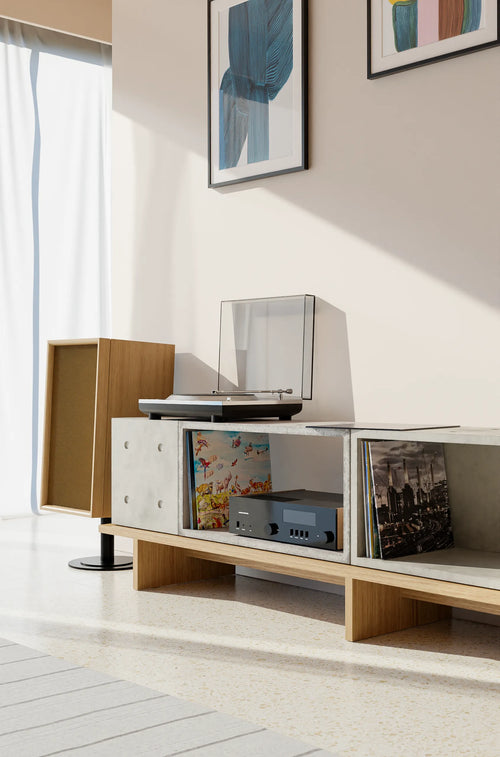
- In the living room, as auxiliary storage and a surface for decoration. To place a television, choose a lower unit, between 40 and 60 cm, to keep the screen at eye level.
- Behind a sofa or in an entryway, a slim enfilade or console structures the space without cluttering it.
Remember to wall-mount tall furniture like display cabinets, using the provided anti-tip system: a safety precaution, especially with children.
Style and Material: Matching the Sideboard to the Room
The sideboard is an imposing piece: its style sets the tone of the room. A few guidelines to match it:
- Wood and oak veneer warm up the room and pair with almost anything. Fluted or ribbed fronts add texture and character.
- Metal and glass, as on a display cabinet, visually lighten the space and suit smaller rooms where a solid piece would appear massive.
- Incorporate a material already present, such as the wood of the table or the black of a light fixture, to create a unifying theme.
Fenalor's tip: Before buying, outline the sideboard's footprint on the floor with adhesive tape, including the open doors. This allows you to quickly check that there's comfortable clearance and that the furniture doesn't block a door or a radiator.

How to Decorate the Top of a Sideboard?
The top of a sideboard is the most visible surface in the room, and the one most quickly cluttered. Three guidelines are enough to style it. First, height: if you hang a mirror or painting above it, leave 20 to 30 cm between the top and the bottom of the frame, and choose a width of about two-thirds that of the sideboard, never more. Next, volume: create a trio of descending heights, for example, a lamp, a medium vase, and a low object, rather than a series of identically sized objects in a line. Finally, proportion: keep at least one-third of the top free, otherwise the piece will look cluttered even when tidy. Shift the group to one side and let the other breathe; it's more dynamic than a perfectly centered composition. Pick items from our vases and ceramics or our mirrors to create your display.
Solid, Veneer, or Panel: What to Look for in Construction?
Two sideboards that look identical can have very different lifespans. Solid wood is recognized by its grain, which continues onto the panel's edge; it can be sanded and repaired indefinitely but remains the heaviest and most expensive. Veneer involves gluing a thin sheet of real wood onto a panel: the appearance is authentic, and the weight is controlled, provided the surface is never sanded. Melamine, on the other hand, prints a design onto a particle board, usually 16 to 18 mm thick; it is the most affordable, but damaged edges cannot be repaired. Pay particular attention to the hardware, which reveals the level of finish: metal hinges with soft-close mechanisms, drawer slides on rollers rather than simple wood-on-wood gliding, and a rigid back panel for the unit, not thin cardboard. For an oak or teak piece, follow our advice on how to care for solid wood furniture.
Frequently Asked Questions
What is the ideal height for a sideboard?
Aim for a height of 75 to 90 cm. Around 80 to 90 cm, the top remains a practical serving surface, at hand height, for placing a lamp, a vase, or a tray. For a television, opt instead for a low unit of 40 to 60 cm, to keep the screen at eye level.
What is the difference between a sideboard and an enfilade?
A sideboard is the generic term for a low storage unit with doors and drawers. An enfilade is a low and particularly elongated sideboard, often on legs, which emphasizes length and offers a large surface for decoration. Every enfilade is a sideboard, but not every sideboard is an enfilade.
What length of sideboard for my dining room?
Preferably choose a sideboard that is shorter than your table, to maintain balanced proportions. Most importantly, leave 90 to 100 cm of space between the sideboard and the table, allowing chairs to be pulled back and doors to be opened without obstruction. Measure the wall before deciding.
Where to place a sideboard in the living room?
Against a clear wall, it serves as storage and a decorative surface. Behind a sofa, a slim enfilade delineates the space. For placing a television, prefer a dedicated low unit, more suitable for eye-level viewing than a classic sideboard. Always maintain comfortable clearance around it.
Ready to choose yours? Browse our storage units, all of our furniture, and our selection for the dining room. For a unit dedicated to the screen, see how to choose a TV unit, and for the entryway, how to choose an entryway console.