Updated July 2026.
For a cozy bedroom, banish the single ceiling light and multiply low, warm light sources: two symmetrical bedside lamps, a portable accent lamp, and, if needed, reading sconces. Warm light around 2700 Kelvin, diffused by fabric lampshades, transforms the room into a cocoon.
The first rule: forget the single ceiling light
A single light from the ceiling flattens the space and creates a cold, almost clinical atmosphere. In a bedroom, you want the opposite: a low, diffused light that envelops you. The right approach is to (mentally) replace the ceiling light with several small sources distributed throughout the room. This is the principle of layering, detailed in our guide on how to properly light each room.
Bedside lamps, the essential duo
This is the foundation of a successful bedroom: a bedside lamp on each side of the bed, ideally identical for symmetry. Choose fabric lampshades, which filter and soften the light. The right height: the bottom of the lampshade roughly at eye level when you're sitting in bed, meaning a lamp about 45 to 60 cm high on a standard bedside table. This way, you avoid being dazzled while reading.

A portable light for the soul of the room
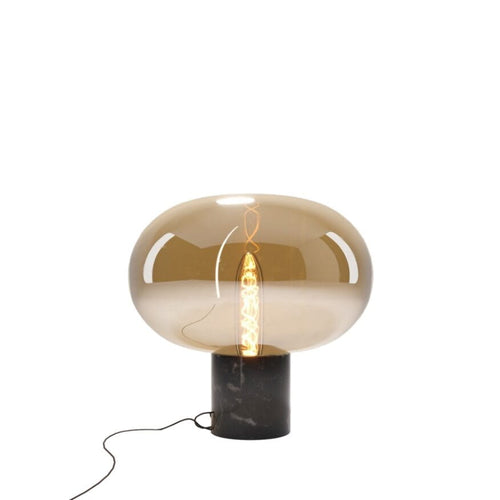
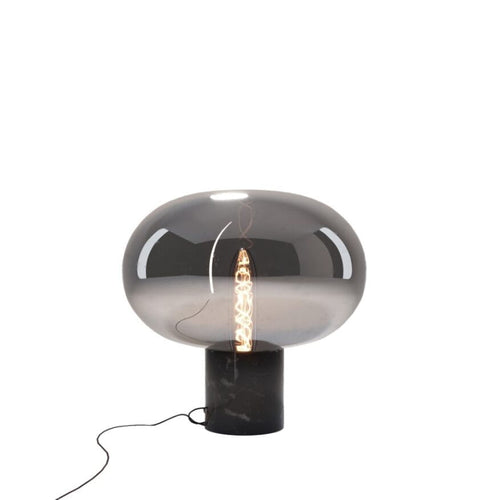
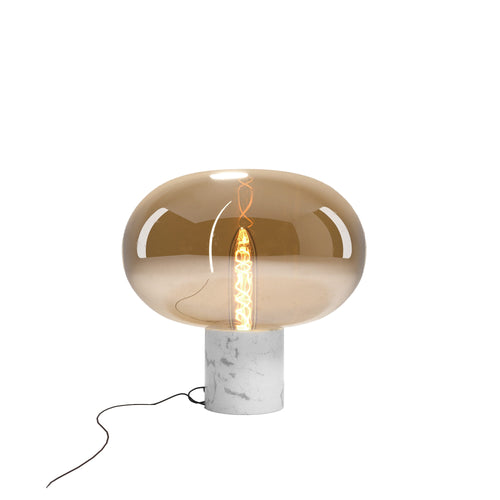
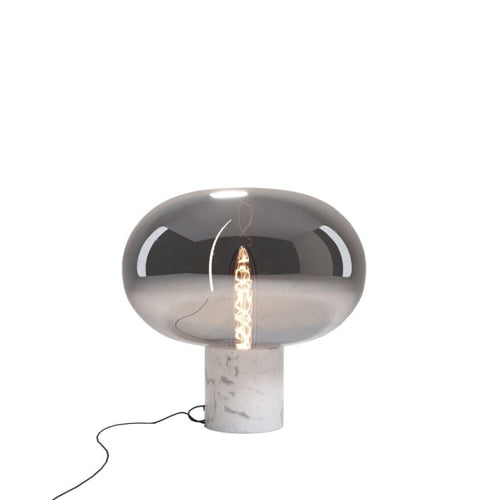
To enhance the cozy effect, add a third, more versatile source: a table lamp or a small rechargeable lamp on a dresser, a shelf, or even the floor. This warm, low light point, lit alone in the evening, immediately creates an intimate atmosphere. This detail is what transforms the bedroom from functional to enveloping.

Sconces: smart space-saving
If your bedside tables are narrow or non-existent, wall sconces installed on either side of the bed free up the surface completely while providing good reading light. Place the center of the sconce approximately 100 to 120 cm from the floor, slightly above your shoulder when sitting, and choose an adjustable model to direct the beam onto your book.

Where to place each source
A quick guide to distributing your bedroom lighting:
| Source | Role | Placement |
|---|---|---|
| Bedside lamp | Reading and night light | Lampshade at eye level when sitting, a 45 to 60 cm model |
| Reading sconce | Save space | Center 100 to 120 cm from the floor, above the headboard |
| Portable lamp | Evening ambiance | Dresser, shelf or floor |
The detail that changes everything: light temperature
Even the most beautiful lamp fails to impress with a cool white bulb. In a bedroom, always aim for warm light, around 2700 Kelvin, which leans towards golden: this is what soothes and prepares you for sleep. A dimmer, when possible, is the ultimate bonus for adjusting intensity throughout the evening. To understand everything, see our guide on light temperature room by room.
Fenalor's tip: maintain the same light temperature across all sources in the bedroom. A single bulb that is cooler than the others is enough to disrupt the harmony and cozy effect.
What intensity to aim for in a bedroom?
A bedroom is the least lit room, and this is intentional. Count about 100 to 150 lux for ambient lighting, compared to 150 to 200 lux in a living room: the goal is not to see everything clearly, but to create soft zones. In practice, a bedside lamp of 300 to 450 lumens is largely sufficient for reading without eye strain, and 100 to 200 lumens are suitable for an accent lamp placed on a dresser. For a 12 m² bedroom, a total of 1,500 to 2,000 lumens distributed among three or four sources gives a balanced result, whereas a single 2,000-lumen ceiling light overwhelms everything. The game-changing trick remains the frosted bulb rather than transparent: at low height, a bare filament bulb is dazzling as soon as you lie down. We detail suitable models in our guide for choosing a bedside lamp.
The mirror and the dressing area, the light we forget
Bedroom lighting doesn't stop at the bed. In front of a mirror, light should come from the front, not the ceiling, otherwise it creates shadows under the eyes and chin. The correct setup: two vertical sources on either side of the mirror, centered approximately 160 to 170 cm from the floor, at face height. This is also the only place in the bedroom where a slightly more neutral white is justified, around 3000 Kelvin, to properly judge clothing colors. In a dressing room or wardrobe, an LED strip attached under the high shelf, or sensor-activated strip lights that turn on when opened, prevent having to relight the entire room. Finally, place your mirror facing a window when possible: natural light remains the most accurate.
Frequently Asked Questions
Is a ceiling light necessary in a bedroom?
It's not essential. If you keep one, equip it with a dimmer and don't rely on it as the sole source. A cozy bedroom is primarily built with bedside lamps, an accent lamp, and, if needed, reading sconces, all with warm light.
What light temperature for a bedroom?
Aim for warm light around 2700 Kelvin, which leans towards golden and prepares you for rest. Avoid neutral or cool whites above 3500 Kelvin, which are too stimulating for a sleeping area. Consistency between all sources is as important as the shade itself.
At what height should a reading sconce be placed?
Place the center of the sconce approximately 100 to 120 cm from the floor, slightly above your shoulder when you are sitting in bed. An adjustable model allows you to direct the beam onto the book without illuminating the entire wall.
How many light sources in a bedroom?
Count three to four sources: two bedside lamps, an accent lamp, and, depending on the room, a dedicated reading light. This distribution allows for modulated lighting, from soft light for reading to a simple nightlight before sleeping.
To compose your lighting, browse our selection for the bedroom and the entire lighting collection from Fenalor.