Updated July 2026.
To properly light a room, layer three levels of light: diffused general light from the ceiling, functional light directed where you read or cook, and low, warm ambient light. This layering, rather than a single ceiling light, gives the room its depth and warmth.
The three levels of light, in brief
A comfortable interior never relies on a single ceiling bulb. It combines three complementary layers, which can be turned on together or separately depending on the time of day:
- General lighting illuminates for movement and clarity.
- Functional lighting focuses the beam on a specific task: reading, cooking, styling hair.
- Ambient lighting, low and warm, sets the evening mood.
Their layering creates depth. Multiply light points: three to five sources distributed in a room make it much more welcoming than a single ceiling light.

1. General lighting: the base
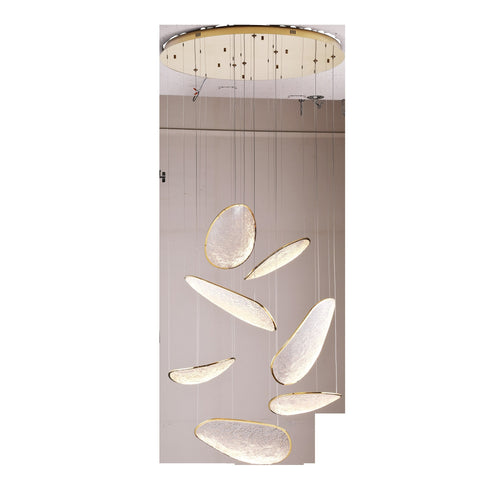
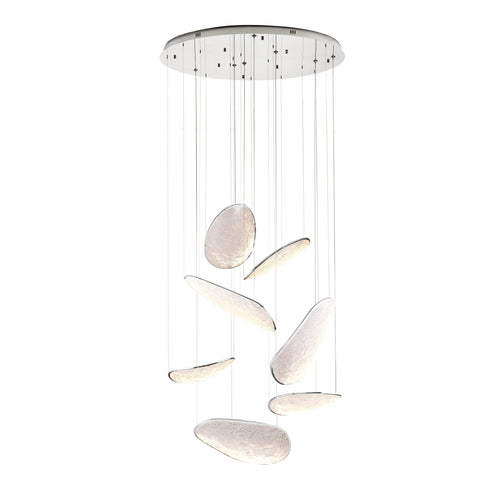
This is the main lighting, allowing you to move around and see clearly. The classic choice remains the ceiling light; replacing it with a beautiful pendant light is enough to make the light more diffused and enveloping. In a large space, a floor lamp placed in a corner takes over and fills the vertical space. See this layer as the background light, never as the only source.
2. Functional lighting: for daily tasks
This is the light for specific actions: reading, cooking, working, getting ready. It focuses precisely where it's needed. A table lamp on a desk, a light strip under kitchen wall cabinets, or an adjustable wall lamp near a bed provide just the right amount of light, without dazzling the rest of the room.

3. Ambient lighting: the soul of the room
The most neglected, yet the most magical. These are the small, low, warm sources, around 2700 kelvins, that create islands of light once night falls: a lamp on a shelf, a reading light in a corner, a candle. It's this layer that transforms a room from merely lit to truly welcoming.
How many light sources per room?
Each room has its balance. Here are simple guidelines, to be adapted to your space:
| Room | Sources to combine | Temperature |
|---|---|---|
| Living Room | All three light levels | 2700 K |
| Bedroom | Two bedside lamps and an ambient source, no strong ceiling light | 2700 K |
| Kitchen | General lighting and worktop lighting | 3000 to 4000 K |
| Dining Room | Centered pendant light and an accent lamp | 2700 to 3000 K |
| Entryway | Ceiling light or wall lamp and a small accent source | 2700 to 3000 K |

Fenalor tip: Install a dimmer on your general lighting. Being able to lower the intensity in the evening transforms a functional room into a cozy haven, without changing a single fixture.
To go further
This guide lays the groundwork. To delve deeper into each topic:
- How to choose a pendant light for a dining room
- How to light a bedroom for a cocooning effect
- Floor lamp or table lamp: which to choose
- Which light temperature to choose room by room
- The 5 most common lighting mistakes
How many lumens per room?
The three levels indicate how to distribute light; the question remains how much to put. We calculate in lux, the illuminance received on the ground. Count about 100 to 200 lux in a living room or bedroom, 300 lux in an entryway or dining room, 300 to 500 lux in a kitchen and on a worktop, and 500 lux on a desk. To convert to lumens, roughly multiply the surface area by the desired illuminance: a 20 m² living room at 150 lux requires about 3,000 lumens, to be distributed among four or five sources rather than concentrated in one. Also, remember the order of magnitude for bulbs: a 6-watt LED gives about 500 lumens, a 9-watt one about 800. It's better to have several modest, well-placed bulbs than a single very powerful ceiling light.
Controlling light: circuits, dimmers, and scenarios
A beautiful installation that's poorly controlled remains uncomfortable. The principle: never put all your sources on the same switch. At a minimum, separate general light from ambient light, so you can turn off the former without plunging the room into darkness. In a living room, ideally, plan for three controls: ceiling light, living room corner lamps, accent lighting. Switched outlets, controlled from a wall switch, prevent you from having to walk around the room to turn on three lamps. The dimmer remains the most cost-effective investment, provided you verify that your LED bulbs are indeed dimmable, which is not always the case. Connected bulbs offer a solution without major work, with recorded scenarios. In an open kitchen, it is imperative to separate the work area from the dining area, as we detail in our guide on kitchen lighting.
Frequently Asked Questions
How many light sources should there be per room?
Aim for at least three sources in a living space: general light, functional light, and ambient light. The more small, low, warm light points you distribute, the deeper and more welcoming the room appears. A single ceiling light, on the other hand, flattens volumes and causes eye strain in the evening.
What light temperature should I choose?
For a living room, bedroom, or dining room, stick to warm light around 2700 kelvins. Reserve neutral white, around 3500 to 4000 kelvins, for functional rooms like the kitchen or a worktop, where clear visibility is needed.
Should I keep the ceiling light?
You can keep it as general lighting, provided you don't limit yourself to it. The ideal is to equip it with a dimmer and supplement it with table lamps and a floor lamp. Alone, a ceiling light creates a flat and somewhat cold light.
How to warm up light that is too cold?
First, change the bulbs to a warm white around 2700 kelvins. Then, add low sources, such as a table lamp with a fabric shade, which filter and soften the light. A few well-distributed warm points are enough to warm up an entire room.
To compose your lighting layer by layer, explore Fenalor's lighting collection.
For ceiling lights, which often provide general lighting, see our guide on choosing a ceiling light.