Updated July 2026.
To set up a home office, install a work surface 72 to 75 cm high and at least 60 cm deep, place the screen at eye level, and ensure daylight comes from the side. Keep about 60 cm of legroom and storage within reach.
Where to set up your home office?
Before even choosing the furniture, choose the location, as it determines your daily comfort. Two criteria are paramount: light and quiet. Ideally, place the desk perpendicular to a window, so that daylight comes from the side: facing the window, you would be dazzled, and with your back to it, the screen would reflect glare. A corner of a room, a niche, a free wall section, or the space behind a sofa are enough to create a dedicated area, away from traffic.
The right desk dimensions
A comfortable workstation relies on a few simple measurements, valid for both large desks and small accent tables:
| Dimension | Good guideline | Why |
|---|---|---|
| Work surface height | 72 to 75 cm | Forearms horizontal, shoulders relaxed |
| Depth | 60 cm (45 cm minimum for a laptop) | To move the screen back and leave space in front of the keyboard |
| Width | 100 to 120 cm | Screen, notes, and mug without getting in the way |
| Clearance under the surface | At least 60 cm | Legs free and space to cross legs |
These guidelines are not theoretical: our compact desks are 100 cm wide by 75 cm high with 62 cm of knee clearance, and family models go up to 120 cm wide by 60 cm deep.

The screen, the chair, and posture
The furniture is only half the comfort: posture does the rest. Adjust the height so that the top of the screen is at eye level, about an arm's length away, to keep your neck straight. Choose a chair with a seat height adjustable between 45 and 48 cm and a backrest that supports the lower back. Your feet should rest flat on the floor, and your elbows should form an angle close to 90 degrees. This chain of adjustments prevents tension in the neck and shoulders at the end of the day.

Desk area lighting
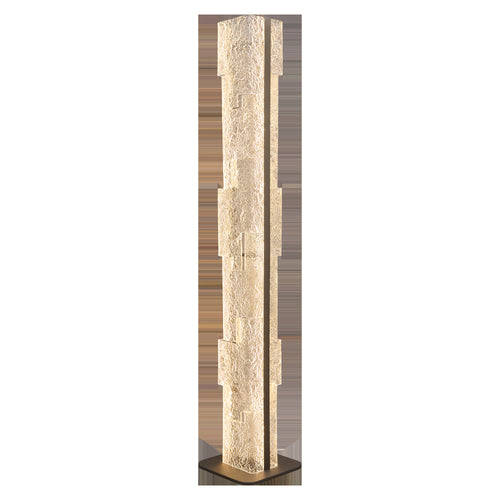
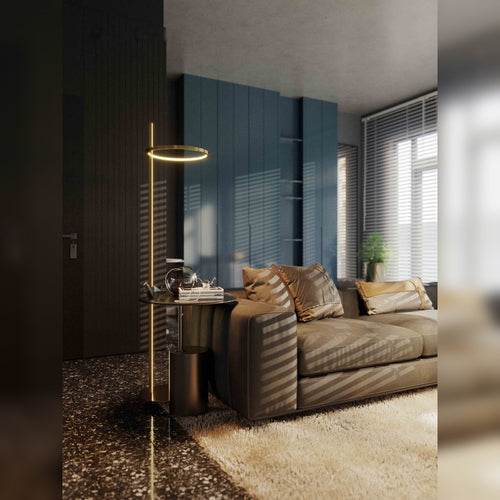
Daylight isn't enough once evening falls. Add an adjustable table lamp, placed on the opposite side of your writing hand – to the right if you are left-handed, to the left if you are right-handed – so that your hand doesn't cast a shadow on the paper. Direct the beam towards the work surface, not towards the screen, to avoid glare. A slightly invigorating, rather neutral light helps with concentration. You'll find more options in our lighting collection.
Storage and cables
A clear workspace helps you work with a clear mind. Install well-placed wall shelves above the desk to free up the surface, keep a cabinet or a few boxes within reach for papers, and tame cables with a cable pass-through and a power strip secured under the desk. Anything that disappears from sight lightens the room and the mind. Find organization solutions in our selection of storage units.
Setting up a desk in a small space
You don't need an entire room to work well. A slim console, 30 to 40 cm deep, makes a suitable makeshift desk along a wall or behind a sofa. A corner, a niche, or the space under a staircase can accommodate a small work surface. To delineate the area without partitioning, place a rug under the desk or erect a shelving unit as a separator. The important thing is to be able to close out the day: put away the laptop and papers in the evening so that the desk area doesn't encroach on the living space.

Fenalor's advice: First, identify where the daylight comes from, then place the desk perpendicular to the window. This simple reflex avoids glare and reflections on the screen, and makes every workday more comfortable.
Taking care of the background and sound during video conferences
If you make video calls, your desk area becomes a set: you might as well compose it carefully. What the camera frames is about one and a half meters behind you, so clear that area and place two or three simple elements there, a shelf with a few books, a frame, a plant. Avoid a bare wall, which flattens the image, and backlighting from a window placed behind you. Sound is just as important: an empty room, with straight walls and a hard floor, creates an echo that the microphone amplifies. A rug under the desk, a thick curtain, and a few textile surfaces absorb a good part of this reverberation, without specific acoustic treatment. Finally, consider the height of the camera, which should be at eye level: a laptop placed flat systematically films from below. Our frames and wall art and our plants create a simple and clean background.
Making the desk area pleasant to live in
A purely functional workstation quickly feels deserted. A few elements can change the atmosphere without cluttering the work surface. A plant placed next to the screen softens the light and provides a resting point for the eyes, useful for relieving visual fatigue when looking up. A personal item, a frame, or a small ceramic piece is enough to make the place feel lived in. A warm-light lamp, in addition to the task lamp, allows you to switch to a softer ambiance at the end of the day and signal that work is stopping. Reserve an empty space of at least 30 cm on the side of the surface to place a mug or a notebook without playing Tetris. And if the desk is in a living room, choose materials and colors consistent with the rest: a light wood top and closed storage blend much better than office furniture. Our desks are designed with this in mind.
Frequently asked questions
What height for a desk?
The standard height for a work surface is 72 to 75 cm. At this height, forearms remain horizontal and shoulders relaxed once seated. Then adjust the seat height so that feet rest flat and elbows form an angle of about 90 degrees.
Where to place your desk in relation to the window?
Preferably perpendicular to the window, to receive daylight from the side. Facing the window, you risk glare; with your back to it, the screen reflects. This lateral orientation provides the best visual comfort, both during the day and in the late afternoon.
What size desk for a laptop?
A 100 cm wide surface is sufficient for a laptop, a notebook, and a mug. In terms of depth, 45 cm is suitable for a laptop alone, but aim for 60 cm as soon as you add a monitor, to be able to move it back to a good distance from your eyes.
How to set up a desk in a small space?
Use a slim console as an auxiliary desk, a corner of the room, or the space behind a sofa. Install shelves high up to free up the surface, and manage cables. A rug or a low shelf is enough to delineate the desk area without adding a partition.
To create your own, explore our desk universe, our storage solutions, and our lighting.