Updated July 2026.
To layer textiles in a bedroom, work in layers from largest to smallest: a throw or bedspread folded at the foot of the bed, then two to four cushions of decreasing sizes. Vary the materials and stick to two or three colors that complement each other for a cozy, never cluttered, overall look.
The principle: layer from large to small
A bed that makes you want to climb into it is no accident: it's built in successive layers, just as good lighting is built from multiple sources. You start with the largest, which sets the foundation, and move towards the smallest, which adds the finishing touch. Three elements are enough to create this cozy volume: the basic bedding, a throw or a blanket, and then a few decorative cushions. The trick is not to accumulate, but to play with thicknesses, sizes, and materials.

The bedspread or throw: the warming layer
This is the centerpiece of layering. A throw or bedspread folded over the lower third of the bed structures the bedding and invites you to settle in. Lay it flat for a neat look, or drape it diagonally from a corner for a more relaxed feel, letting it fall slightly over the sides. Opt for a material with a distinct texture, such as wool, thick knit, or faux fur, which contrasts with the smooth softness of the sheets and immediately adds depth.

Cushions: number, sizes, and arrangement
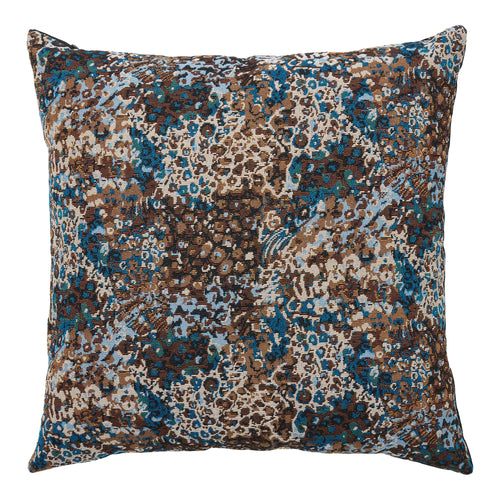
Decorative cushions complete the picture. For a double bed, two to four cushions in addition to the pillows are sufficient, and an odd number adds dynamism to the composition. Play with decreasing sizes: a large 50x50 or 60x60 cm square at the back, a 45x45 cm square in front, then a 30x50 or 40x60 cm lumbar cushion in the foreground. This gradient of formats creates depth and avoids a rigid alignment. The same principle applies to your seating, as detailed in our guide on dressing your seating with cushions and throws.

Playing with materials and colors
Success largely depends on mixing materials. Combine washed linen, wool, bouclé, corduroy, and a touch of faux fur: even in a range of beige tones, these textures are enough to add depth. For colors, stick to two or three shades that complement each other, starting with a neutral base, and incorporate a color already present in the room, on the curtains or a rug, to create a visual link. This coherence is at the heart of a calming bedroom.

Mistakes to avoid
- Accumulating too many cushions: the bed becomes tedious to make every evening, and the effect becomes cluttered.
- Matching everything in the same material and color: the overall look appears flat and lacks dimension.
- Choosing a filling smaller than the cover: the cushion sags limply and loses its shape.
- Forgetting to repeat a color from the rest of the room, which makes the bedding stand out awkwardly.
Layers at a glance
| Layer | Role | Guide |
|---|---|---|
| Throw or blanket | Warms and structures | Folded over the bottom third of the bed |
| Large cushion | Provides the background | 50x50 or 60x60 cm, at the back |
| Medium cushion | Adds volume | 45x45 cm, in front of the large one |
| Lumbar cushion | The finishing touch | 30x50 or 40x60 cm, in the foreground |
Fenalor's tip: choose a filling slightly larger than the cover, for example, a 50 cm cushion in a 45 cm cover. The cushion stays plump, with crisp corners, instead of sagging limply over the weeks.
Adapting layers to the seasons
A bedroom doesn't use the same textiles in January and July, and that's what makes layering dynamic. In winter, use three layers: the duvet, a thick wool or knit throw, often around 400 to 600 grams per square meter, then two to four cushions. As soon as warmer weather arrives, replace this throw with a light waffle-cotton or washed linen throw, typically around 200 to 250 grams per square meter, and reduce to two cushions: the bed remains dressed without feeling stifling. This seasonal rotation has a practical benefit: it forces you to wash and air the items twice a year. Store off-season layers in a breathable cotton cover rather than a sealed plastic bag, which retains moisture. Two complete sets, one per season, are ample: it's better to have two throws you love than a pile you never use.
Washing and storing your textiles without damaging them
Layering only remains beautiful if each piece retains its softness. Wash sheets every one to two weeks, but space out for the rest: a throw or blanket can withstand three to four washes per year, and decorative cushion covers two to three. Always follow the label, with a useful guide: wool and thick knit items go on a wool program at 30°C, with reduced spin at 400 rpm, and flat drying to prevent stretching. Washed linen and cotton can handle 30 to 40°C and benefit from being removed from the drum slightly damp. None of these textiles appreciate high-temperature tumble drying. Between washes, shake and air: ten minutes in the shade are enough to fluff up a filling. Finally, rotate your cushions a quarter turn each week, so that wear and light are distributed instead of always marking the same side. Discover our cushions and all of our textiles.
Frequently Asked Questions
How many cushions on a bed?
For a double bed, two to four decorative cushions in addition to the pillows are enough to create volume without cluttering. An odd number, three or five, adds dynamism to the composition. Beyond that, the bed becomes difficult to make every evening, and the effect quickly becomes overloaded.
How to combine textile colors?
Stick to two or three complementary colors, starting with a neutral base. Repeat a shade already present in the room, on the curtains or a rug, to create a visual link. Above all, vary the materials: linen, wool, bouclé, and velvet add depth even in a monochromatic scheme.
How to arrange a throw or bedspread?
Fold the throw or bedspread over the lower third of the bed, neatly flat, or drape it diagonally from a corner for a more relaxed effect. Let it fall slightly over the sides. At the foot of the bed, it structures the bedding and instantly warms up the entire look.
What cushion sizes should I choose?
Layer decreasing sizes: a large 50x50 or 60x60 cm square at the back, a 45x45 cm square in front, then a 30x50 or 40x60 cm lumbar cushion in the foreground. This gradient of formats creates depth and avoids a rigid alignment.
To compose your bedding, browse our throws and our cushions. And if you're dressing a sofa or armchair, follow our guide on dressing your seating, in addition to our ideas for creating a calming bedroom.