Updated July 2026.
To decorate your seating, layer an odd number of cushions, mixing sizes: large 45 to 50 cm squares at the back, and rectangular ones in front. Vary the materials and stick to two or three colors. Add a throw folded diagonally over an armrest or corner to complete the arrangement.
How many cushions, and in what sizes?
The most harmonious arrangements are based on an odd number: three cushions on an armchair or small sofa, five on a large one. Then, mix formats to create depth rather than a monotonous row.
| Format | Dimensions | Role |
|---|---|---|
| Large square | 50 x 50 cm | Back cushion, structures the seating |
| Standard square | 45 x 45 cm | Most versatile, layers everywhere |
| Rectangular | 45 x 60 cm | Lumbar support, placed in front |
| Decorative shape | Shell, sphere | Finishing touch, in small numbers |
The principle: the largest cushions at the back, the smallest and decorative shapes in front, like successive planes.

The filling trick
A cushion that looks flat or sadly soft almost always comes from an undersized filling. The rule: choose a filling 2 to 5 cm larger than the cover. A 45 x 45 cm cushion should be filled with a 50 x 50 cm insert, which properly fills the corners and stays plump. Feather or down fillings can be fluffed up with a pat, while synthetic ones require little maintenance: both work, as long as you choose a slightly larger size.
Mixing materials and patterns
Textiles are what warm up a seat. For a rich but cohesive look, combine three categories:
- A soft solid: a cushion in boucle or corduroy, which sets the base.
- A strong texture: knitted fabric or faux fur, for depth.
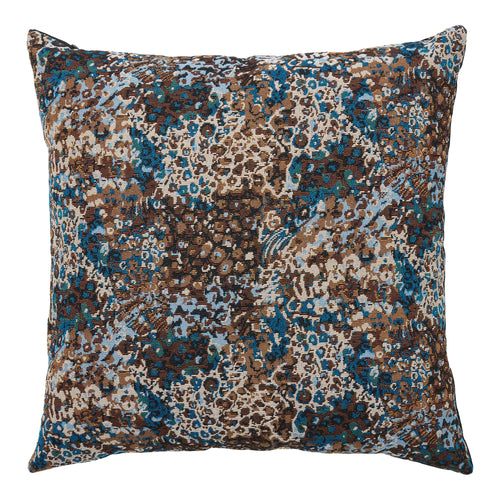
- A pattern: a jacquard or graphic design, echoing a color already present in the room.
For colors, stick to two or three shades, matching the rest of the living room. The full method is in our guide on how to combine colors and materials.

The art of the throw
The throw adds the final layer, making a seat cozy. Three ways to drape it:
- Draped diagonally over an armrest or a corner of the sofa, for a soft, natural fall.
- Folded in three over the backrest or foot of an armchair, for a neater, tidier look.
- Rolled in a basket next to the seat, practical and decorative.
Fenalor's tip: leave the throw slightly undone, never perfectly straightened. A slightly lively drape, with visible fringes, immediately gives that lived-in and welcoming look we seek in a living room.

Caring for covers and throws without damaging them
Well-maintained textiles keep their appearance three times longer, and it all starts with purchase: prioritize removable covers with zippers or flaps, because a non-removable cushion becomes unsalvageable after the first stain. Most cotton or linen covers can be washed at 30 degrees Celsius, on a delicate cycle, without tumble drying, which shrinks fibers and dulls colors. Wool and knits require a wool program at 30 degrees or hand washing, then flat drying to avoid distortion. Boucle, corduroy, and faux fur are treated differently: gentle brushing in the direction of the pile and regular airing are usually sufficient, without direct ironing. Finally, shake and turn your cushions once a week: this ten-second action redistributes the filling and prevents sagging. For everything about these materials, see our guide boucle, corduroy, or linen.
Evolving your textiles with the seasons
This is the most economical way to refresh a living room: cushion inserts are expensive, covers much less so. Keep a set of permanent inserts, in 45 x 45 and 50 x 50 cm sizes, and rotate two collections of covers. In autumn and winter, switch to wool, knitted fabrics, velvet, and faux fur, in warm tones: terracotta, tobacco brown, deep green. In spring and summer, return to washed linen and cotton, in light shades and lighter patterns, and replace the thick throw with a thin one, simply draped over an armrest. Three to five covers per season are enough to visibly transform a seat, with minimal storage space needed. Explore all our textiles to compose your two sets.
Frequently Asked Questions
How many cushions on a sofa?
Aim for an odd number: three cushions on a small sofa or armchair, five on a large sofa. Mix sizes, a large square at the back and a rectangular one in front, rather than a row of identical cushions, which looks stiff.
What size cushion should I choose?
The 45 x 45 cm square is the most versatile. Add a large 50 x 50 cm square at the back to structure the seat, and a 45 x 60 cm rectangular one in front for lumbar support. This gradation of formats adds depth to the arrangement.
Why does my cushion look flat?
The filling is probably too small. Choose an insert 2 to 5 cm larger than the cover: a 45 cm cushion should be filled with a 50 cm insert. It will then fill the corners and remain plump. Regular patting will restore its volume.
How to place a throw on a sofa?
Drape it diagonally over an armrest or a corner, or fold it in three over the backrest of an armchair. Leave it slightly undone for a natural look. A wool or cotton throw, with fringes, adds warmth and texture in one piece.
To style yours, explore our cushions, our throws, and our entire selection for the living room.