Updated July 2026.
Today's artificial plants offer the greenery of a living interior without any watering. Choose a large, structuring subject, vary heights and foliage, and pay attention to the plant pot: it's what makes the whole thing look credible. A quick dusting now and then is all it takes to keep them beautiful all year round.
Why choose artificial plants
Not everyone has a green thumb, a light-filled apartment, or the time to water at the right pace. Realistic artificial plants solve this problem: individually veined leaves, naturally shaped stems, credible green gradients. From a meter away, the eye is fooled, and the decor remains intact all year round, with no yellowed leaves or pots to monitor.
It's the ideal decorative asset for dark rooms, long trips, or radiators that dry everything out. You decorate knowing exactly the result you'll get in six months as well as in five years.

Choosing a large item to structure the room
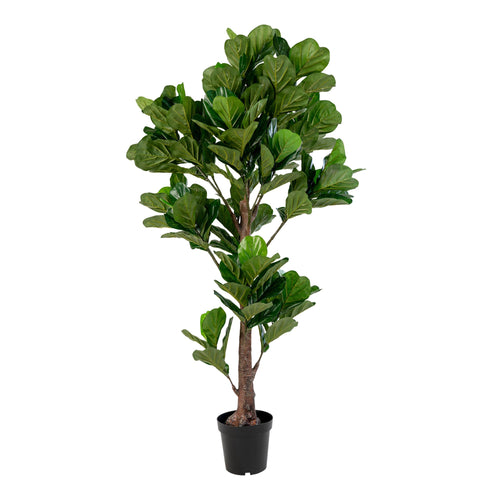
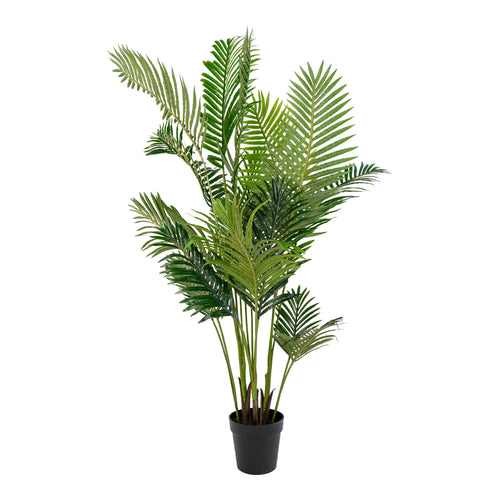
In every successful interior, one plant plays the main role: a generous tree, placed in a slightly bare corner, which immediately gives soul to the space. A large palm, a ficus, or a beautiful monstera with cut-out foliage attract light and attention. The idea is always the same: a vertical subject, tall enough to interact with the volume of the room, which becomes the starting point of the composition.
Composing like a florist: heights and foliage
A credible plant corner never relies on a single randomly placed plant. It is composed, like a bouquet, through contrasts:
- A graphic and sculptural silhouette, like a monstera with large leaves.
- Light and airy notes, like fine grasses that add movement.
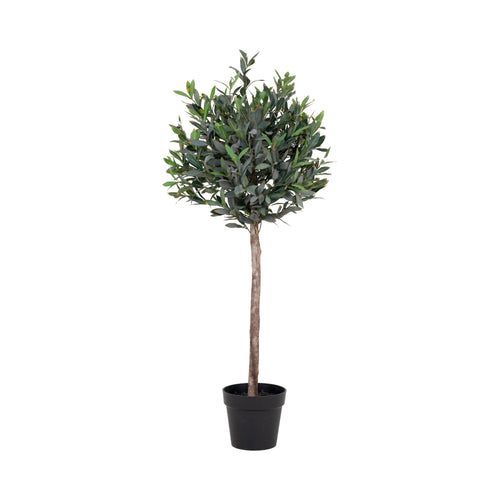
- A floral touch that brightens the whole, an olive tree or a trailing plant for softness.
This play of balance between large and small, dense and delicate, is what gives a plant corner its natural look.

The planter, a detail that changes everything
It is often forgotten, yet it is what betrays or enhances an artificial plant: the pot. Magnificent foliage placed in a generic container loses half its charm. Conversely, a beautiful planter in ceramic, metal, or braided fiber, and the same plant changes category. Think of the pot as the frame of a painting: it is not the first thing you see, but it is what gives value to the whole.

Which plant for which room?
Each room calls for a different scale and atmosphere. Some guidelines:
| Room | Recommended plant |
|---|---|
| Living Room | A large structuring subject: palm, monstera, olive tree |
| Bedroom | Low and soft volumes, placed on a bedside table |
| Entrance | A slender subject that welcomes without cluttering |
| Office, Bathroom | A small touch of green in the field of vision |
How to care for an artificial plant
Maintenance comes down to keeping the foliage clean and bright:
- Dust regularly with a feather duster or dry microfiber cloth, leaf by leaf for large formats.
- Revive from time to time: a slightly damp cloth, or a hairdryer with cold air to dislodge dust from fine foliage.
- Keep away from prolonged direct sunlight, which eventually fades colors, as with any material.
Fenalor's tip: For a truly natural look, manually adjust the stems and leaves after unpacking, avoiding perfect symmetry. A slightly irregular plant always looks more real. Compose yours with our plants and flowers collection.
Recognizing a well-made artificial plant
Not all artificial plants are created equal, and three details are enough to tell them apart. First, look at the material of the leaves: molded polyethylene, flexible and slightly satin, reproduces veins in relief and bends without whitening, whereas thin PVC or printed fabric remain flat and shiny. Then observe the color variation: real foliage is never a uniform green; it mixes lighter young shoots, darker shades, and sometimes a hint of brown. A plant that is only one saturated green can be spotted from three meters away. Finally, check the structure of the stems: a stem with a metal core bends and holds its pose, while a rigid plastic stem imposes its factory shape. For large subjects, a real wooden trunk changes everything. Find these criteria in our plants and flowers collection.
What height to choose, and how to stabilize the pot
Scale is what makes a plant credible, even more than its quality. In a living room of standard height, a large subject intended to structure a corner should be chosen between 150 and 180 cm: below 120 cm, it reads as a placed object rather than a tree. On a sideboard or console, aim for 40 to 70 cm, which is about half the height of the furniture. On a bedside table or desk, 20 to 35 cm is plenty. Be aware of the weak point of large models: weight. Delivered very light, they tip over at the slightest draft or kick. Weigh down the bottom of the planter with pebbles, sand, or a bag of gravel, then mask the surface with moss or clay balls for a neat finish. Our planters and ceramics complete the set.
Frequently Asked Questions
Do artificial plants really look real?
Today's realistic models, with veined leaves and naturally shaped stems, fool the eye from a meter away. The secret lies mainly in the staging: a beautiful planter, varied heights, and manually adjusted stems are enough to make them stunning.
How to clean an artificial plant?
Dust it regularly with a feather duster or dry microfiber cloth. For deeper cleaning, wipe the leaves with a slightly damp cloth, or use a cold-air hairdryer on fine foliage. Avoid soaking textile materials.
Where to place an artificial plant at home?
Anywhere, as it doesn't depend on light or water. A large subject structures a living room corner, a low volume adds a soft touch to a bedside table, an slender subject enlivens an entrance. Just avoid prolonged direct sun exposure, which fades colors.
Do artificial plants yellow over time?
Well-maintained and out of direct sunlight, they retain their color for years. It's prolonged exposure to ultraviolet light that can eventually fade colors. Placement in indirect light preserves their vibrancy long-term.
To create your green corner, be inspired by our plants and flowers collection and Fenalor's decoration universe.