Updated July 2026.
Choose a wall light based on its use: adjustable for reading, with up and down diffusion to highlight a wall, or with frosted glass for soft light. Place it approximately 160 cm from the floor in a hallway, 100 to 120 cm next to a bed, and plan for a cable outlet at the desired location.
Types of wall lights and their uses
A wall light is chosen primarily for what it needs to illuminate. Three main families cover most needs:
- The adjustable wall light (or reading light): an articulated arm or spot to direct the beam, ideal above a bed or a reading chair.
- The double-diffusion wall light: it sends light upwards and downwards, creating two halos on the wall and highlighting a hallway or living room.
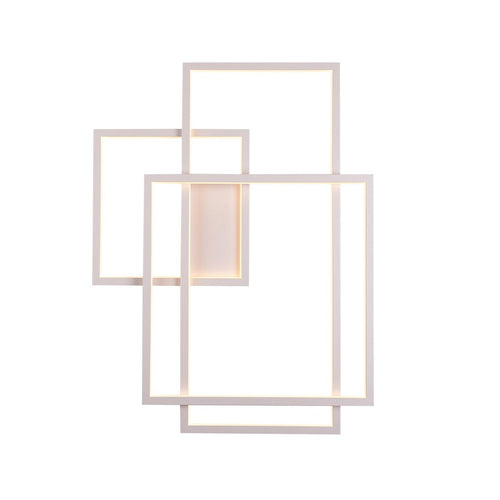
- The diffuser wall light: frosted, opal, or ceramic glass, it provides soft and enveloping light without glare.

Where to place a wall light depending on the room
The height depends on the use. This table summarizes useful guidelines:
| Use or Room | Type of Wall Light | Height of Center |
|---|---|---|
| Reading in bed | Adjustable | 100 to 120 cm from the floor |
| Hallway, corridor | Double diffusion | Approximately 160 cm from the floor |
| Above a mirror | One or a pair of wall lights | 170 to 185 cm, at face height |
| Living room, wall to highlight | Frosted glass or double diffusion | 150 to 160 cm from the floor |
Near a bed, an adjustable model frees up the bedside table; we detail this use in our guide for lighting a cozy bedroom. In an entryway or hallway, find all spacing guidelines in the guide for lighting an entryway and hallway.

Choosing the material and finish
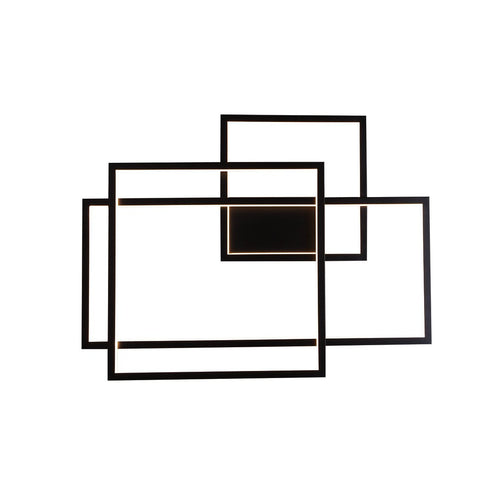
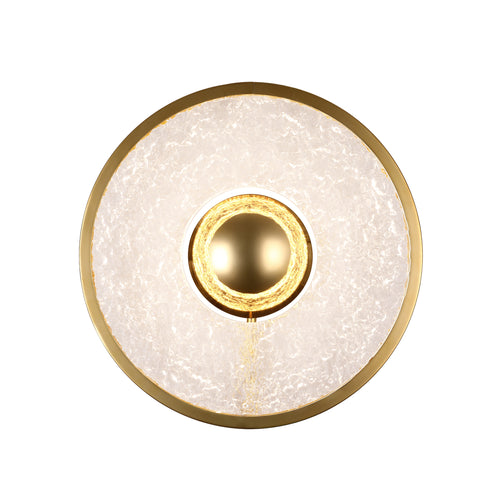
As with any light fixture, the finish matters as much as the shape. Matte black metal creates a contemporary and graphic line; brass or gold warms and catches the eye; frosted glass and ceramic soften the light; wood adds a natural touch. The right approach: reuse a material already present in the room to create a consistent theme.

Wired or rechargeable wall light?
Most wall lights connect to a cable outlet in the wall: anticipate its location before drilling, as moving it later will require channeling. If you cannot run a wire, there are wireless rechargeable wall lights that can be fixed anywhere and recharged periodically. Practical for rentals or to add a light point without major work.
Fenalor's tip: Before mounting, check the bulb base indicated on the product sheet (often E27, E14, or G9) and the direction of diffusion. A wall light that illuminates downwards is not a substitute for an adjustable reading light, and vice versa.
Projection, the figure to check in a narrow hallway
Projection is the depth that the wall light extends from the wall, and it's the dimension most often overlooked. A flat wall light or one with a wall-mounted diffuser generally extends 8 to 12 cm, while a model with an articulated arm or an offset shade can reach 15 to 25 cm, sometimes more once the arm is extended. In a hallway less than 90 cm wide, stay under 12 cm of projection, otherwise you'll brush against the fixture as you pass, and a bag or shoulder will always end up catching it. The reasoning reverses near a bed: there, an arm of 25 to 35 cm is precisely what allows the light to be brought above the book rather than on the wall. So, check this dimension on the product sheet before buying, just like the height, and prioritize flat formats in all passage areas of the entryway.
Bathroom: understanding the IP rating before buying
In a wet room, an ordinary wall light has no place: French regulations divide the bathroom into zones, and each requires a level of protection. Remember the simple principle: the closer you get to the shower or bathtub, the higher the IP rating of the light fixture must be. An IP44, which resists water splashes, is the minimum around the sink and above a mirror. In the immediate vicinity of the shower, it goes up to IP65, designed for jets. Outside these zones, a classic light fixture becomes acceptable again. The rating is always indicated on the technical sheet: if you cannot find it, assume that the model is not intended for a humid room. If in doubt about the zones in your installation, have an electrician validate the point before drilling, rather than after.
Frequently Asked Questions
At what height should a wall light be placed?
Count approximately 160 cm from the floor for the center of a hallway or living room wall light, at eye level. Near a bed, lower it to 100 to 120 cm for a reading light, and above a mirror, raise it to 170 to 185 cm, at face height.
Which wall light to choose for reading in bed?
An adjustable model, which directs the beam onto the book without illuminating the entire wall. Placed on either side of the bed at 100 to 120 cm from the floor, the wall light frees up the bedside table while providing true reading light.
Can a wall light be installed without any work?
Yes, thanks to wireless rechargeable wall lights, which are simply fixed to the wall and recharged from time to time. This is the ideal solution for rentals or where no cable outlet is available, without channeling or an electrician.
How many wall lights for a hallway?
Space them 2 to 3 meters apart along the wall, approximately 160 cm from the floor. A 6-meter hallway thus requires two to three wall lights for regular light, with no shadow zones between two points.
To find yours, explore our collection of wall lights and all Fenalor lighting.