Updated July 2026.
To choose a living room armchair, start by considering its use: reading, occasional seating, or a statement piece. Aim for a seat height of 43 to 47 cm from the floor and a comfortable depth, a durable fabric that withstands daily use, and a size proportionate to the available space. A swivel model adapts to all orientations in the room.
What role do you want it to play?
Before considering color or style, ask yourself what the armchair will do in your living room. Its function dictates its form:
- A reading nook: opt for a enveloping backrest and a deep seat where you can settle in for a long time, paired with a floor lamp or reading light.
- Occasional seating: a lighter, easy-to-move model that complements the sofa when entertaining guests.
- A statement piece: an armchair with a distinctive design, in a bold fabric or color, that becomes the focal point of the room.
A single living room can accommodate two mismatched armchairs: this is often more lively than an identical pair, provided you maintain a common thread, a color or a fabric. For even lighter occasional seating, a pouf complements the armchair and also serves as a footrest: see how to choose a pouf.

The right armchair dimensions
The comfort of an armchair comes down to a few simple measurements. Check them on the product sheet before ordering, and most importantly, measure the available space in your home.
| Reference | Recommended Value | Why |
|---|---|---|
| Seat height | 43 to 47 cm | To get up and sit down effortlessly |
| Seat depth | 50 to 60 cm | Support thighs, well-supported back |
| Overall width | 55 to 75 cm | Comfortable armrests without cluttering |
| Clearance around | 60 cm minimum | To move around and swivel freely |
Always allow at least 60 cm of clearance in front and around the armchair for movement, a little more if it swivels. In a small living room, a model with slender legs that allows the floor to show visually lightens the room.

Swivel or fixed: which to choose?
Two families coexist in the living room, and the choice mainly depends on how you live in the space:
- The swivel armchair: mounted on a star base, it rotates 360 degrees. Ideal for transitioning from the television to the window or for conversing with the rest of the room without moving the armchair. Many automatically return to their starting position.
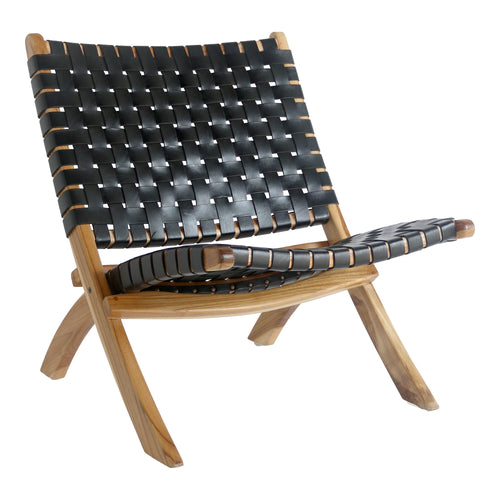
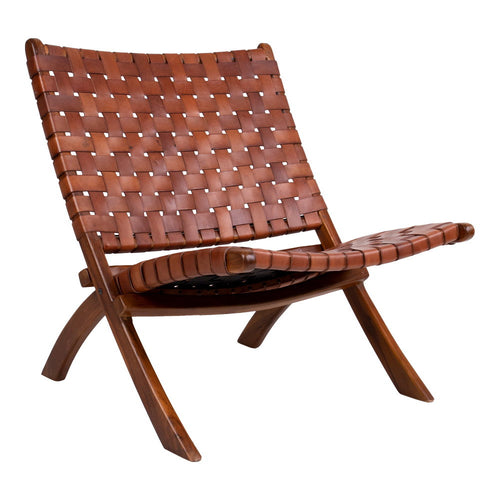
- The fixed armchair: resting on four legs, often made of wood or metal, it offers a more classic and stable seating option, perfect for a dedicated reading corner.
What material and color?
The material determines both the look and the maintenance. Some safe bets:
- Boucle fabric, soft and textured, brings immediate warmth and blends with everything.
- Velvet catches the light and adds depth to a shade, from forest green to midnight blue.
- Chenille, dense and soft, resists daily wear and tear well.
- Leather and faux leather, warm and easy to wipe clean, develop a beautiful patina over time.
As for color, a neutral tone like sand, beige, taupe, or gray transcends seasons and can be easily refreshed with cushions. A strong hue makes the armchair an accent: reserve it if the rest of the living room remains subdued.
Fenalor's tip: Incorporate a material or color from the armchair that is already present in the room, such as the wood of a table or the metal of a light fixture. This subtle reminder creates a visible thread that unifies the entire living room.

Where to place it in the living room?
A well-placed armchair creates a true living corner:
- In a corner, slightly angled towards the sofa, to encourage conversation.
- Near a window, with a side table and a lamp, for a reading nook bathed in natural light.
- On either side of a fireplace, in a pair, for a welcoming symmetry.
Also consider evening lighting: a well-chosen floor lamp next to the armchair transforms the reading corner. We detail the complete lighting of a living space in our guide on how to choose a living room light fixture.
How to match the armchair to the sofa?
An armchair and a sofa don't have to be perfectly matched, but they should complement each other. The most useful rule concerns height: keep less than 5 cm difference between the two seat heights, otherwise one of the occupants will be lower and the exchange will become uncomfortable. Also check the armrest height, which should ideally remain within the same range, around 60 to 68 cm from the floor. For distance, place the armchair between 2 m and 2.50 m from the sofa: beyond that, you'll be shouting; closer than 1.50 m, you'll feel cramped. A 90 to 120-degree angle between the two seats remains the most natural, much more welcoming than a direct face-to-face. For visual harmony, do not duplicate the sofa's fabric: echo its shade in a different material, for example, a boucle facing a velvet. Our guide on how to combine colors and materials in a living room details these balances.
The floor, the rug, and delivery: the details we forget
Three practical points determine comfort long after purchase. First, the floor: on parquet or tiles, place felt pads under each leg, as a living room armchair commonly weighs 12 to 25 kg, and slender legs concentrate all that weight on a few square centimeters. Next, the rug: a long-pile model destabilizes a star base and hinders rotation. Under a swivel armchair, prefer a short-pile rug, or have the rug only extend under the front legs. Our guide on how to choose a living room rug provides suitable sizes for each configuration. Finally, delivery: measure the width of your entrance door, often between 73 and 83 cm, as well as the staircase and elevator passage. An armchair delivered fully assembled cannot be disassembled, unlike a model with screw-on legs.
Frequently Asked Questions
What seat height for a living room armchair?
Count on a seat height between 43 and 47 cm from the floor, like that of a chair: you can then get up and sit down effortlessly. A very enveloping reading armchair can be a little lower, around 40 cm, for a more relaxed and cozy position.
What is the difference between an armchair and a chair?
An armchair has armrests and a wider, deeper seat, designed for long-term relaxation. A chair, being more compact, is primarily used at a table. In a living room, the armchair becomes a true resting spot or convivial occasional seating when entertaining guests.
Is a swivel armchair practical in a living room?
Yes, the swivel function is very practical in a living room: it allows you to turn towards the television, the window, or your guests without moving the armchair. The base remains stable, and many models automatically return to their initial position.
What material to choose for an easy-care armchair?
Boucle fabric and chenille are soft, warm, and easy to integrate. Velvet adds depth but shows marks a bit more. Leather or faux leather can be cleaned with a quick wipe, a real advantage with children or pets.
To find yours, explore our armchairs and our entire selection for the living room.