Updated July 2026.
For a dining room, choose a rug large enough so that all chairs remain on it, even when pulled back. The simple rule: allow 60 to 75 cm of rug beyond each edge of the table. Opt for a flat, tightly woven material, which makes it easier to slide chairs and pick up crumbs.
Why place a rug under the dining table
A rug defines the dining area, warms the floor, and absorbs some of the noise from chairs and conversations. In an open-plan living space, it delineates the dining area without partitioning and unifies it with the table and chairs. It plays the same role as a living room rug, but with an added constraint: here, chairs move in and out several times a day.
This constraint dictates almost the entire choice. A rug that is too small, with chairs half off it, snags at every meal and quickly deforms. A properly sized rug, on the other hand, goes unnoticed and enhances the table.
The 60 to 75 cm rule, the only one to remember
When you sit down and then pull your chair back, it slides approximately 50 to 60 cm backward. For the back legs to remain on the rug, and not on the bare floor (which causes the chair to tip and snag the edge), the rug must extend at least 60 cm beyond the table on each side, or 75 cm for true comfort.
In practical terms: measure the length and width of your table, then add 1.20 to 1.50 m to each dimension. This gives you the minimum rug size. It's better to be too large than too small: a rug that only covers the area under the tabletop, leaving chairs off, is the most common mistake.

What rug size for which table
These guidelines are based on a standard table and the 60 to 75 cm rule. Adjust according to the number of guests; you can cross-reference with our guide on dining table size.
| Your table | Recommended rug |
|---|---|
| Round or square, 90 to 110 cm (4 people) | Round 160 to 200 cm |
| Rectangular 120 to 140 cm (4 to 6 people) | 160 x 230 cm |
| Rectangular 160 to 200 cm (6 to 8 people) | 200 x 290 to 300 cm |
| Rectangular 220 to 260 cm (8 to 10 people) | 250 x 350 cm |
For an extendable table, size the rug for the extended table if you host often.
Round or rectangular: match the shape to the table
The most harmonious approach is to match the shape of the table. A round or oval table pairs well with a round rug, which softens the room and follows the movement of the chairs. A rectangular or square table calls for a rectangular rug, aligned along the same axis. Always center the rug under the table, not under the light fixture or another reference point in the room.

What material to withstand daily meals
Under a table, you want a low, dense surface: chairs slide better, and stains clean up faster. Three types work particularly well:
- Woven natural fibers (jute, sisal): flat, robust, and very decorative in a natural interior. They prefer dry rooms.
- Flat-weave cotton: flexible, often machine washable, ideal with children.
- Chenille: soft and dense, with beautiful patterns, yet easy to maintain.
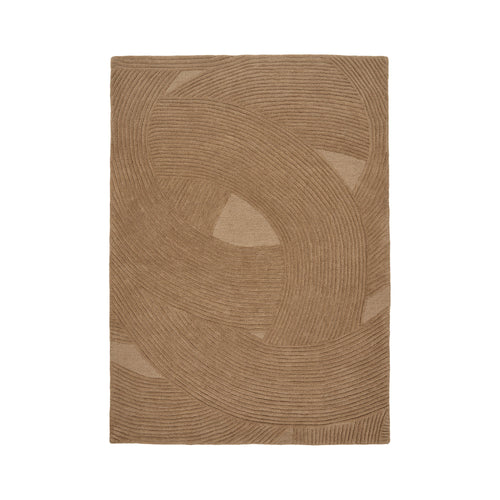
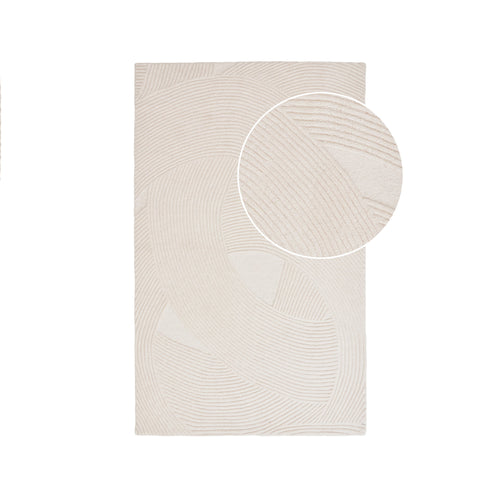
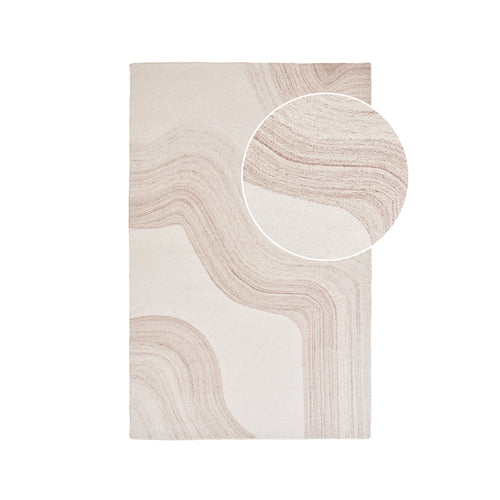
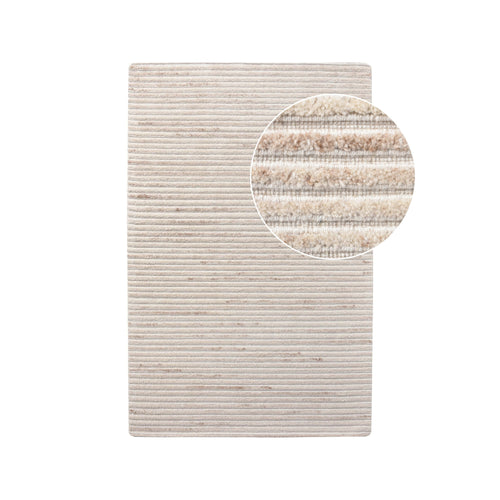
Avoid long-pile rugs (shaggy type) and very thick wools under the table: chairs sink into them, and crumbs get trapped. You can find these materials in our rug collection, and the entire dining area in the dining room collection.

Mistakes to avoid
- A rug that is too small: chairs pulled back fall off the edge.
- A rug that is not centered, misaligned with the table.
- A pile that is too long and obstructs chairs.
- A light-colored, fragile material that is not easy to maintain, placed under a dining area.
The rug pad, the accessory that changes everything under a table
It's the most common oversight, yet the most useful in a dining area. A non-slip rug pad prevents the rug from sliding every time a chair is pulled back, keeps it from wrinkling, and protects the floor from friction. Choose a thin one, 3 to 5 mm thick at most: any thicker, and you add a ridge that chair legs can catch on, and you lose the benefit of a flat weave. Cut it about 2 to 3 cm smaller than the rug on each edge, so it remains invisible. Two types work well: the open-weave PVC grid, economical and breathable, and the latexed felt, slightly thicker but more stable under a large rug. Check compatibility with your floor, as some rubber backings can mark a varnished parquet or light vinyl. You will find the corresponding sizes in our rug collection.
Daily maintenance for a dining room rug
Under a table, a rug deals with crumbs every day and an occasional spilled stain: maintenance is about regularity, not major cleanings. Vacuum twice a week in the direction of the weave, without a rotating brush on jute or sisal, which can fray. Treat a stain within minutes: blot from the edge to the center with a dry cloth, never rubbing, then dab with lukewarm water and a little mild soap. For plant fibers, which dislike large amounts of water, prefer dry cleaning with baking soda left for an hour and then vacuumed. Rotate the rug half a turn twice a year to distribute wear from chair legs and sun exposure. Finally, place felt pads under the chairs: they reduce abrasion and facilitate movement. Our guide to choosing your dining chairs goes further on this point.
Frequently Asked Questions
What size rug for a 6-person table?
For a rectangular table measuring 160 to 200 cm that seats 6 to 8 people, aim for a rug of 200 x 290 or 200 x 300 cm. The goal remains the same: extend at least 60 to 75 cm beyond each side so that pulled-back chairs stay on the rug.
Should the rug be larger than the table?
Yes, always. A dining room rug should extend 60 to 75 cm beyond the table on each side, so that the back legs of the chairs remain on it when people sit down or get up. A rug that is only the size of the tabletop is too small.
Do you need a round rug under a round table?
It's the most harmonious choice: a round rug complements the table and follows the movement of the chairs. Allow for a diameter equal to that of the table plus approximately 120 cm, meaning 160 to 200 cm for a round table of 90 to 110 cm.
What rug material for families with children?
Opt for a flat-weave cotton, often machine washable, or a dense chenille that is easy to clean. These low surfaces allow chairs to slide, don't trap crumbs, and stand up well to daily stains.